
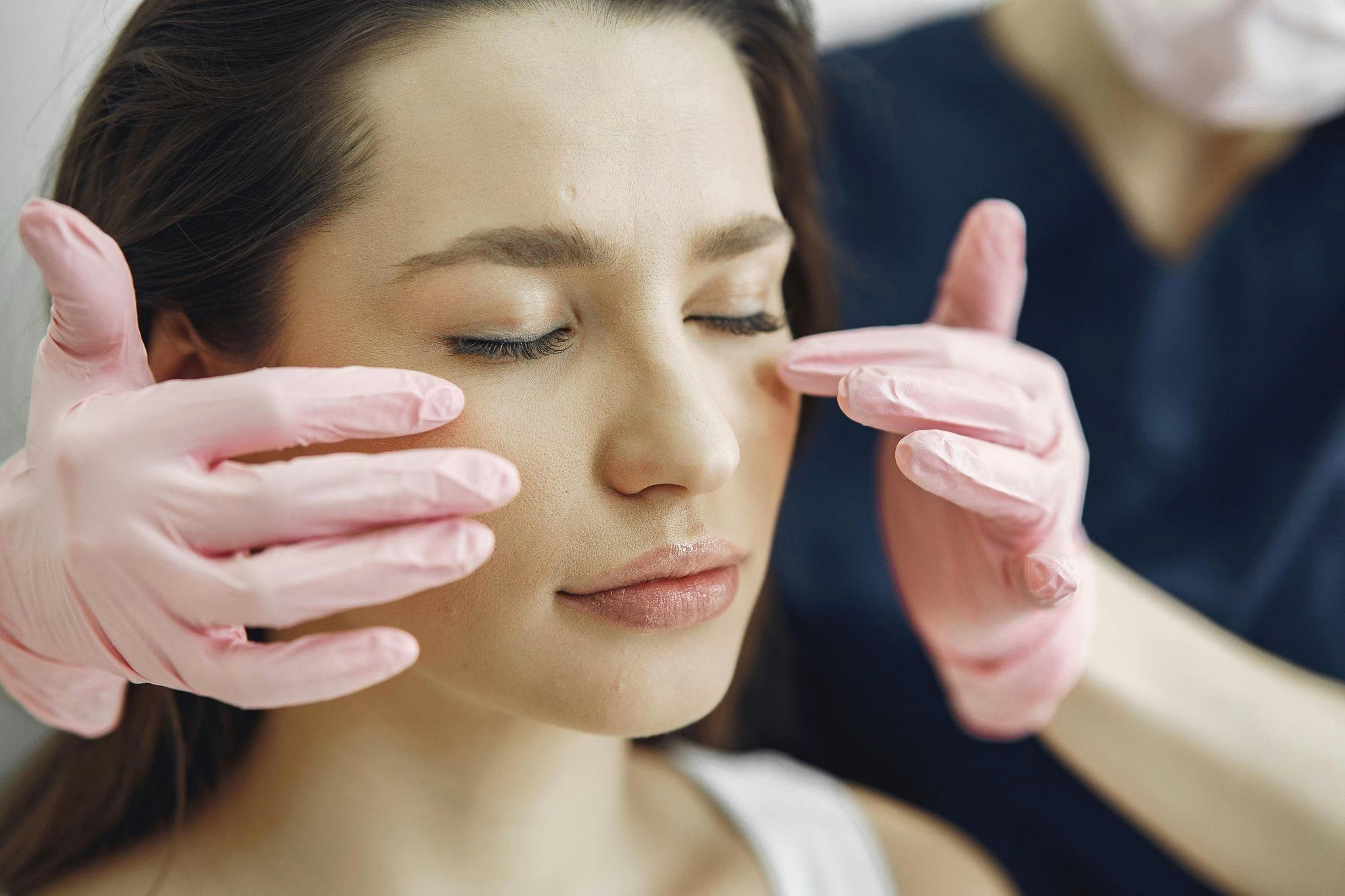
Today’s aesthetic preferences are shaped by tight schedules, rising demand for natural results, and a desire to maintain appearances without major disruptions. As a result, cosmetic treatments have evolved to become faster, more localised, and better integrated into everyday life. Targeted non-surgical procedures now offer solutions that fit around modern routines, not the other way around.
Minimising Downtime Through Low-Impact Procedures
Time is a major consideration in treatment choice. Most people cannot afford to take days off to recover from invasive procedures. Targeted treatments, such as dermal fillers, anti-wrinkle injections, and skin rejuvenation therapies, are designed to be minimally invasive and completed in short appointments. Some options require as little as 15 to 30 minutes and involve no bandages, stitches, or time away from work.
This makes them especially appealing for those balancing work, parenting, or study. Providers like Define By Jill non-surgical skin treatments meet this demand by offering results-focused options that can be performed quickly and discreetly. The emphasis is on integration—not interruption.
Addressing Specific Concerns for Maximum Efficiency
Rather than treating the entire face or undergoing general rejuvenation, targeted treatments focus on individual areas. Crow’s feet, nasolabial folds, volume loss in the cheeks, or fine lines around the lips can each be addressed independently. This allows clients to prioritise the areas that matter most to them, saving both time and cost.
With precise application and lower product volumes, noticeable results are achieved without the exaggerated changes associated with more invasive procedures. It’s a tailored solution for people who want refinement, not reinvention.
Supporting Ongoing Maintenance, Not Just Correction
Modern aesthetic routines are increasingly preventative. Younger clients, in particular, are embracing treatments not to reverse ageing, but to slow it. Targeted care fits into this approach by offering subtle enhancements that preserve skin health and elasticity over time.
Instead of undergoing a large procedure every few years, many opt for small, regular adjustments that keep features balanced and refreshed, mirroring how health and appearance are managed through consistent skincare, fitness, and diet habits.
Aligning with Everyday Wellness Routines
Self-care is no longer indulgent; it’s routine. Targeted treatments have become another extension of this mindset, similar to getting a haircut or booking a massage. Because they are quick, repeatable, and personalised, these procedures align with how people manage their broader wellbeing—frequent, functional, and non-disruptive.
With more awareness around mental health, body image, and confidence, aesthetic procedures are increasingly seen as tools to support how people feel in their daily lives. That said, individuals should review the TGA’s guidance on cosmetic injections to understand potential risks, practitioner qualifications, and the importance of informed consent before proceeding with any treatment.
Offering Flexibility That Evolves with Lifestyle
Unlike surgical outcomes, which are fixed and long-term, non-surgical targeted treatments can be adjusted as personal preferences change. Whether it’s tweaking volume in one area, skipping a session, or focusing on new concerns, the flexibility matches the evolving nature of modern routines.
As lifestyles shift, due to age, career, family, or simply changing goals, these procedures provide a way to adapt without committing to permanent changes. That adaptability is key to their growing popularity.
Personalisation is the New Standard
Targeted cosmetic treatments fit modern routines because they’re built around choice, efficiency, and subtlety. In a time where people value flexibility and authenticity. These solutions provide exactly what’s needed, no more, no less, without sacrificing time, comfort, or control.
