
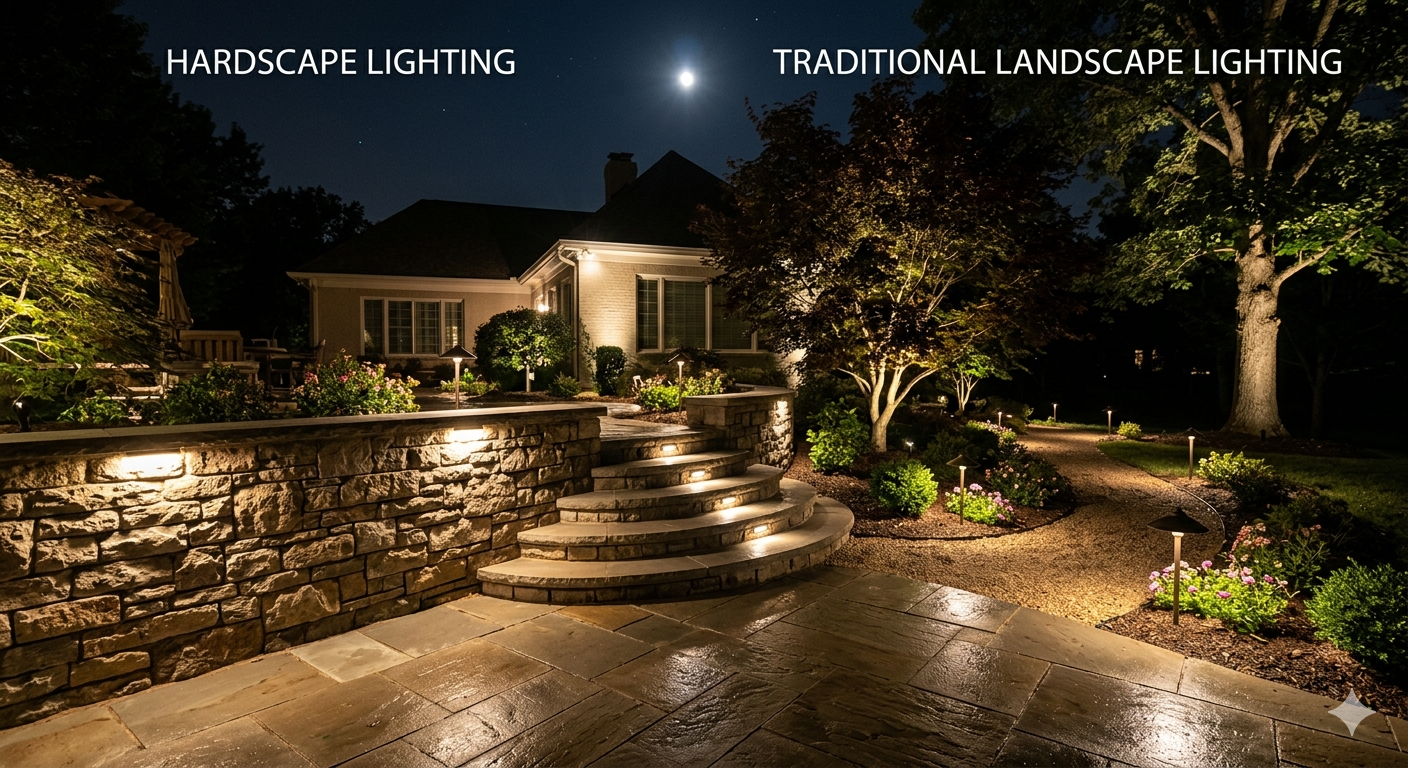
Deciding between hardscape and traditional landscape lighting involves understanding their unique attributes and functions. While hardscape lighting focuses on illuminating architectural elements like patios and walls, traditional landscape lighting brings a softer touch to natural outdoor features. Each style creates different moods and serves various practical purposes for homeowners.
In this article, we delve into the specifics of both lighting types, scrutinizing their applications, benefits, and optimal usage scenarios. Whether you seek to highlight the grandeur of stonework or want a whimsical garden after twilight, the right lighting choice can profoundly transform your exterior living space.
Contents
Hardscape Lighting Defined: Enhancing Architectural Features
Hardscape lighting pertains to the practice of illuminating built structures within a landscape, such as retaining walls, decks, and stone pathways. This lighting style is geared towards showcasing the texture and form of these hard materials, providing both aesthetic appeal and safety after dark. hardscape lighting is essential for emphasizing the overall design of outdoor spaces.
These lights are often installed seamlessly into the hardscape elements, offering a clean, integrated look that complements the solid surfaces. For example, LED fixtures can be recessed into paver stones, creating a guide light that doubles as a decorative feature. They are durable and designed to withstand the elements, ensuring long-lasting performance.
When selecting hardscape lighting, consider factors like the color temperature of the lights, which can range from warm yellows to cool whites, to best accentuate the material’s natural hues. Additionally, opt for energy-efficient options with timers or sensors to maximize functionality and minimize maintenance.
Traditional Landscape Lighting and Its Role in Outdoor Aesthetics
Traditional landscape lighting illuminates the softscape elements of your yard, such as gardens, trees, and shrubs. The aim here is to create depth, highlight textures, and draw attention to the living aspects of your outdoor space. It often involves a subtle and artistic approach, playing with shadow and light to enhance the natural beauty of the vegetation.
Fixtures like path lights, spotlights, and floodlights can cast varying intensities and angles of illumination. This variety allows for the creation of an inviting ambiance that can transform the appearance of a garden at night. Strategic lighting techniques such as uplighting and moonlighting can dramatize trees and highlight flowerbeds, adding depth and intrigue to the landscape.
Homeowners should consider the scale of their garden and the specific features they wish to highlight when choosing lights. It’s also advisable to look into energy efficiency, durability against weather conditions, and the potential for smart control systems that allow for customization and convenience.
Comparing Hardscape and Traditional Landscape Lighting in Functionality
Hardscape and traditional landscape lighting differ significantly in their primary functions. While hardscape lighting is directional and focused, offering sharp contrasts and clear boundaries, traditional landscape lighting aims for a gentle wash of light that blends softly with the outdoor environment.
The choice between the two can impact the usability of outdoor space. Hardscape lighting can extend the functionality of an outdoor area by illuminating steps, walkways, and seating areas, thereby improving safety and accessibility. In contrast, traditional landscape lighting creates a welcoming atmosphere but might not provide sufficient light for tasks or movement.
Assess your outdoor space based on the activities you anticipate and the mood you want to set. If showcasing architectural features and ensuring pathway visibility are priorities, hardscape lighting is the go-to choice. For a more atmospheric effect and to enhance the natural charm of your garden, traditional landscape lighting will be more suitable.
Choosing Between Hardscape and Traditional Landscape Lighting for Your Space
Your choice between hardscape and traditional landscape lighting should reflect the purpose and style of your outdoor space. Hardscape lighting adds a modern touch and is best for spaces with prominent architectural features, while traditional landscape lighting offers a timeless look, enhancing the soft, organic elements of your garden.
Considerations such as existing outdoor features, the desired ambiance, and practical usage should guide your decision. A balance of both lighting styles might even be the optimal solution for some, wherein hardscape lighting ensures safety and showcases structures, and traditional landscape provides a warm, inviting glow to the greenery.
To make an informed choice, one might consult with a lighting expert or designer to understand the potential of each lighting style in their specific environment. Ultimately, your lighting should complement your lifestyle, safety needs, and aesthetic preferences to create your ideal outdoor haven.
Ultimately, whether you opt for hardscape or traditional landscape lighting, or a combination of both, the goal is to create an outdoor space that resonates with your personal taste and fulfills your vision. Consider the balance of form and function, the interplay of light with natural and constructed elements, and the overall impact on the atmosphere of your outdoor living areas to make the best choice for your home.
