
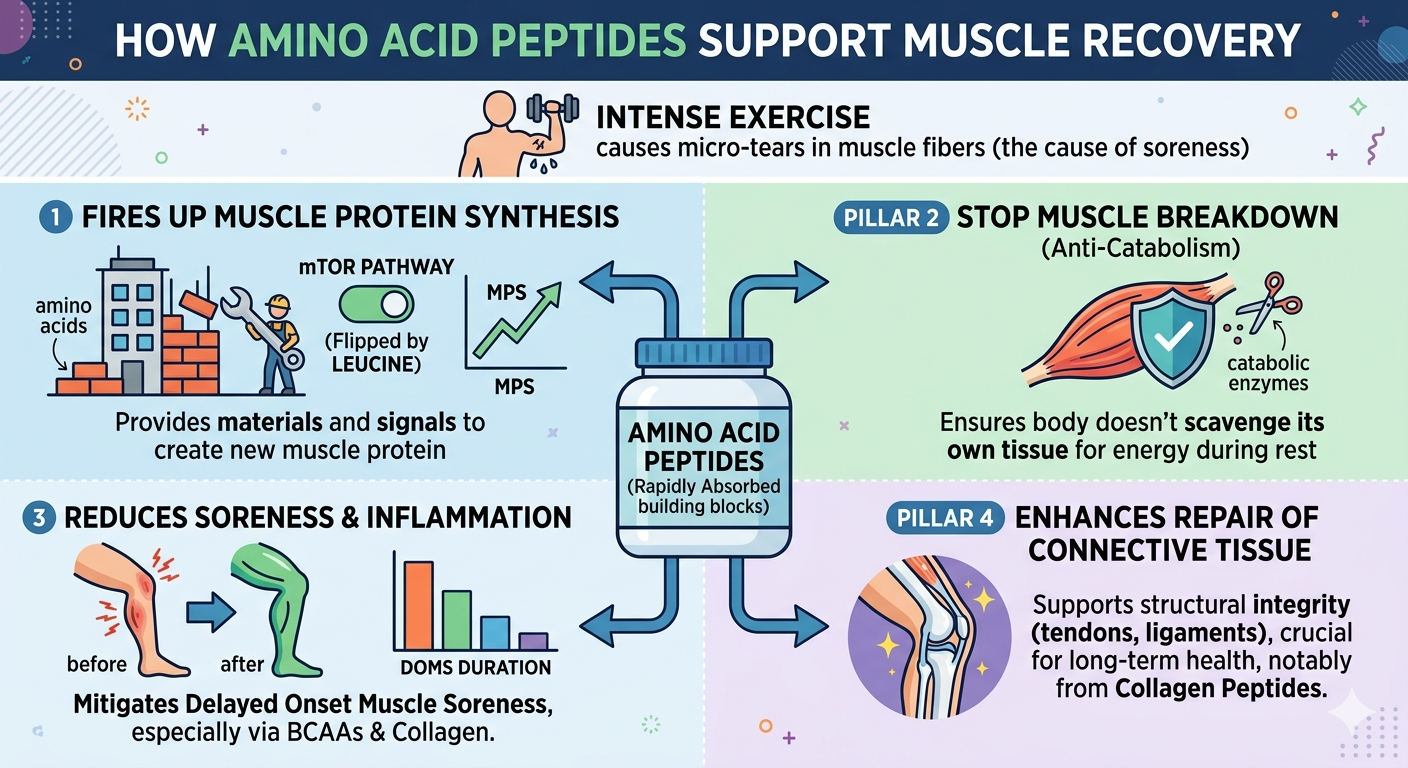
Post-workout recovery is a critical stage in any fitness routine, implicating both the rate of muscle repair and overall performance enhancement. Recent studies have highlighted the significant role that amino acid peptides play in aiding this process. These small chains of amino acids are instrumental in promoting tissue repair and combatting exercise-induced muscle damage.
The efficacy of amino acid peptides in supporting muscle recovery makes them a valuable asset for athletes and fitness enthusiasts alike. Below, we delve into the functions of these compounds and offer practical advice on how to incorporate them into a recovery regimen effectively.
Contents
How Amino Acid Peptides Facilitate Muscle Recovery Post-Exercise
One of the primary roles of amino acid peptides in post-exercise recovery is enhancing protein synthesis. After strenuous activity, the body requires an increased supply of amino acids to repair muscle fibers and facilitate growth. Peptides, with their easily absorbable structure, provide these vital building blocks rapidly and effectively.
Studies suggest that the rapid absorption of peptides compared to whole proteins can accelerate the muscle repair process. This is crucial after training sessions when the body is highly receptive to nutrients that can aid in muscle recovery. The bioavailability of peptides ensures that the muscles receive a quick supply of amino acids when they are most needed.
To leverage the benefits of amino acid peptides, consider consuming peptide-rich supplements within the optimal 30-minute post-exercise window. This can help maximize recovery by taking advantage of the body’s heightened nutrient uptake during this critical period.amino acid peptides
Exploring the Role of Amino Acid Peptides in Reducing Muscle Soreness
Amino acid peptides contribute to diminishing muscle soreness, which is often experienced after intense physical workouts. Known as delayed onset muscle soreness (DOMS), this condition can impede an athlete’s ability to maintain a consistent training schedule.
The peptides’ anti-inflammatory properties play a role in mitigating the cellular damage that causes soreness. By supplying the body with a concentrated source of amino acids, peptides can help reduce inflammation and therefore lessen the severity of DOMS. Moreover, the presence of specific peptides, such as those containing branched-chain amino acids (BCAAs), has been linked to decreased perceptions of muscle soreness.
Incorporating a diet abundant in peptide sources like dairy, eggs, meat, and supplemental peptides, can be highly beneficial. Additionally, spacing out peptide intake throughout the day, rather than in a single serving, may help in maintaining a more constant anti-inflammatory response, potentially reducing soreness over time.
Amino Acid Peptides and Their Impact on Muscle Repair and Growth
The impact of amino acid peptides extends beyond mere recovery; they are also crucial for muscle repair and growth. Peptides signal the body to begin the synthesis of new protein tissues, a process central to muscle regeneration and hypertrophy.
Specific amino acid sequences found in peptides can activate satellite cells near muscle fibers, which are essential for the growth and repair of muscles. This cellular activation is particularly important following resistance training, as it contributes to increased muscle size and strength over time. Additionally, peptides can enhance the body’s use of fat for energy, conserving muscle tissue during endurance activities.
For those looking to optimize muscle repair and growth, incorporating a balanced peptide-rich diet or supplements could be key. Staying hydrated and getting adequate sleep are also vital, as these factors influence how well the body can process and utilize amino acids for muscle development.
Incorporating Amino Acid Peptides Into Your Recovery Plan: Practical Tips
Including amino acid peptides in your recovery plan can be straightforward with the right approach. Peptides are found in many common protein-rich foods and can also be consumed in the form of dietary supplements, offering flexible options for integration into your diet.
When selecting supplements, opt for those that provide a complete amino acid profile. This ensures that you’re getting all the necessary compounds your muscles need to recover and grow. Be mindful of the timing of your intake as well; following the immediacy principle, consuming peptides shortly after a workout can maximize their efficacy.
Lastly, consider working with a nutritionist or a health professional to tailor your peptide intake according to your specific fitness goals and dietary needs. Balancing peptide consumption with other nutritional components and establishing an overall recovery routine including rest, hydration, and stretching, can help optimize results.
Ultimately, amino acid peptides are an integral tool for muscle recovery, offering both immediate and prolonged benefits. They not only hasten recovery post-exercise but also contribute to reducing muscle soreness and are fundamental to muscle repair and growth. By intelligently incorporating them into your diet and recovery plan, you can ensure your muscles bounce back faster and stronger, ready for your next workout challenge.
